Begin of page section:
Page sections:

  • Go to contents (Accesskey 1)
  • Go to position marker (Accesskey 2)
  • Go to main navigation (Accesskey 3)
  • Go to sub navigation (Accesskey 4)
  • Go to additional information (Accesskey 5)
  • Go to page settings (user/language) (Accesskey 8)
  • Go to search (Accesskey 9)

End of this page section. Go to overview of page sections

Begin of page section:
Page settings:

English en
Deutsch de
Search
Login

End of this page section. Go to overview of page sections

Begin of page section:
Search:

Search for details about Uni Graz
Close

End of this page section. Go to overview of page sections


Search

Begin of page section:
Main navigation:

Page navigation:

  • University

    University
    • About the University
    • Organisation
    • Faculties
    • Library
    • Working at University of Graz
    • Campus
    Developing solutions for the world of tomorrow - that is our mission. Our students and our researchers take on the great challenges of society and carry the knowledge out.
  • Research Profile

    Research Profile
    • Our Expertise
    • Research Questions
    • Research Portal
    • Promoting Research
    • Research Transfer
    • Ethics in Research
    • Commission for Scientific Integrity
    Scientific excellence and the courage to break new ground. Research at the University of Graz creates the foundations for making the future worth living.
  • Studies

    Studies
    • Prospective Students
    • Students
    • Registration for Study Programme (Winter semester 2026/27)
    • Welcome Weeks for First Year Students
  • Community

    Community
    • International
    • Location
    • Research and Business
    • Alumni
    The University of Graz is a hub for international research and brings together scientists and business experts. Moreover, it fosters the exchange and cooperation in study and teaching.
Topics
  • Sustainable University
  • Researchers answer
  • Work for us
Close menu

End of this page section. Go to overview of page sections

Begin of page section:
You are here:

University of Graz COLIBRI News Wie Formeln die Medizin persönlicher machen
  • Complexity of Life Conference 2026
  • Doctoral Forum Complexity of Life
  • Members
  • Contact
  • News
  • Events

End of this page section. Go to overview of page sections

Thursday, 16 July 2026

How formulas are making medicine more personalised

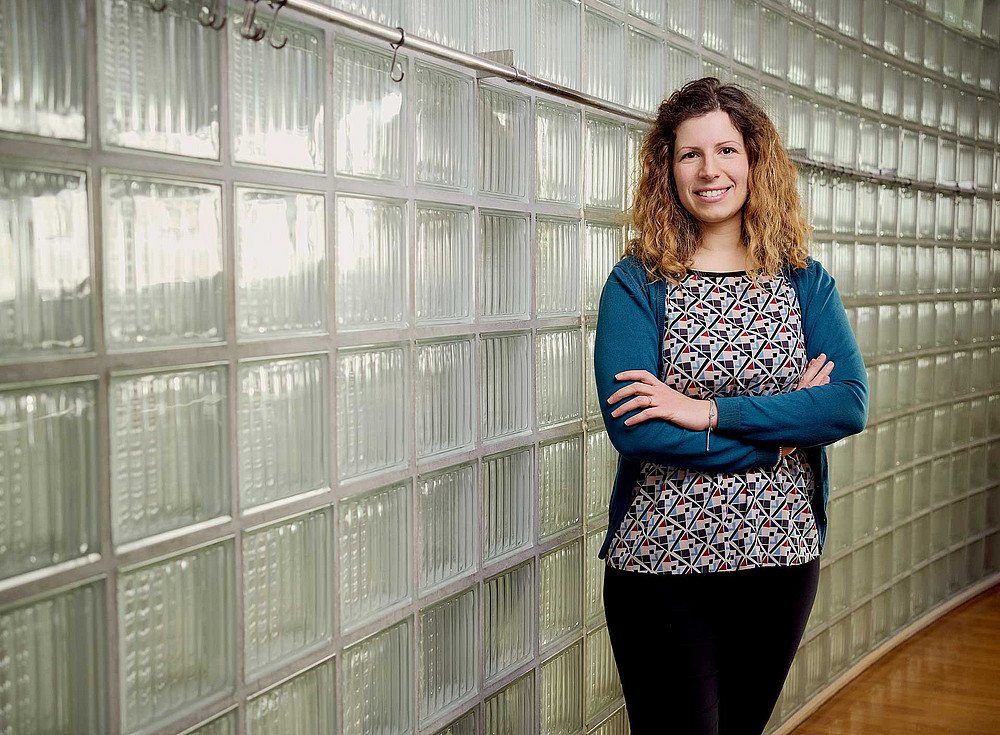
A woman wearing a blue waistcoat is standing in front of a glass wall

Federica Caforio is performing open virtual heart surgery. Photo: wildundwunderbar

When Federica Caforio talks about the heart, it doesn’t sound like an operating theatre, but rather like equations, parameters and simulations. Yet this is precisely where the medical promise of her research lies: one day, clinical data will be used to create a digital twin of the heart – a virtual model that will enable a better understanding of diseases and allow for more personalised treatment plans. She will be presenting her research at the ‘ECMTB 2026’ mathematics conference.

Mathematician Federica Caforio is developing methods for so-called cardiac digital twins: computational models of real hearts that integrate electrical signal transmission, tissue mechanics and blood flow. The starting point for her research was seed funding: the L’Oréal Fellowship for Women in Science, which Caforio received in 2023. This enabled her to develop a proof of concept – initially using synthetic data, i.e. experimental data generated entirely on a computer. The aim was to draw conclusions about the passive properties of heart tissue from information on displacement and strain. In other words: how stiff is the tissue? How does it react to stress?

Caforio is now taking things a step further. As part of a UFO (Unconventional Research) project funded by the Province of Styria, she is working on the active properties of the heart – specifically, the contraction that turns the organ into a pump. This is because heart tissue is not just soft and elastic. It also generates active ‘stress’, contracting and thereby driving the circulatory system. Every heart has its own characteristics.

Mathematically, this personalisation is highly complex. The model contains numerous parameters: some describe electrical processes, others mechanical deformations or the interaction with blood flow. The task of the researchers at the Institute of Mathematics is to adjust these parameters so that the simulation matches clinical measurement data as closely as possible. To complicate matters, different combinations of parameters can produce similar results.

Caforio’s approach therefore combines classical mathematical models with machine learning. At its heart are Physics-Informed Neural Networks, or PINNs for short. Unlike purely data-driven neural networks, they are designed not only to fit existing data but also to take physical laws into account. Put simply: the network does not learn a plausible form, but one that also obeys the underlying equations.

This is crucial for cardiac research. Whilst a predicted displacement field may, at first glance, match the measured data, it only becomes medically useful if it also makes physical sense. With PINNs, therefore, both factors are incorporated into the calculation: fidelity to the data and fidelity to physics, such as differential equations, boundary conditions and initial conditions.

International network

Since April 2026, Caforio has been leading a BioTechMed-Graz Young Researcher Group. The three-year project aims to expand the method and make it more robust: moving from individual mechanical problems to multiphysical models that consider electrophysiology and mechanics together. It is based on a strong international collaborative network with partners at MedUni Graz (Computational Cardiology Lab, Cardiology), Graz University of Technology, the IDea-Lab, and renowned research groups at the Politecnico di Milano, the University of Trento and the Pontificia Universidad Católica de Chile. The collaboration brings together expertise in cardiology, mathematical modelling, computational science and artificial intelligence.

The clinical aim is clear: to visualise tissue changes non-invasively. Scarring in the heart muscle is of particular interest. Such scar tissue can be stiffer than healthy tissue and lose its ability to contract. If a parameter estimation pipeline can detect such spatially varying properties, it could show doctors where scarring is located and how pronounced it is.

Currently, late gadolinium-enhanced MRI – an MRI technique using contrast agents – is often regarded as the gold standard for detecting such scarring. However, it is expensive, not suitable for all patients and can be problematic, particularly for those with kidney problems. Caforio’s long-term vision is therefore to develop an alternative: existing image and motion data could be used to create a virtual representation that visualises relevant tissue changes without the need for additional contrast agent.

A digital twin of the heart would then be more than just a pretty picture on a screen. It could be used to refine diagnoses and test potential treatments in advance. Instead of trying out several procedures or treatment options one after the other, doctors could in future first simulate on the virtual heart what is likely to happen inside the body.
created by Konstantin Tzivanopoulos

Related news

Linking mechanics and function in embryo development

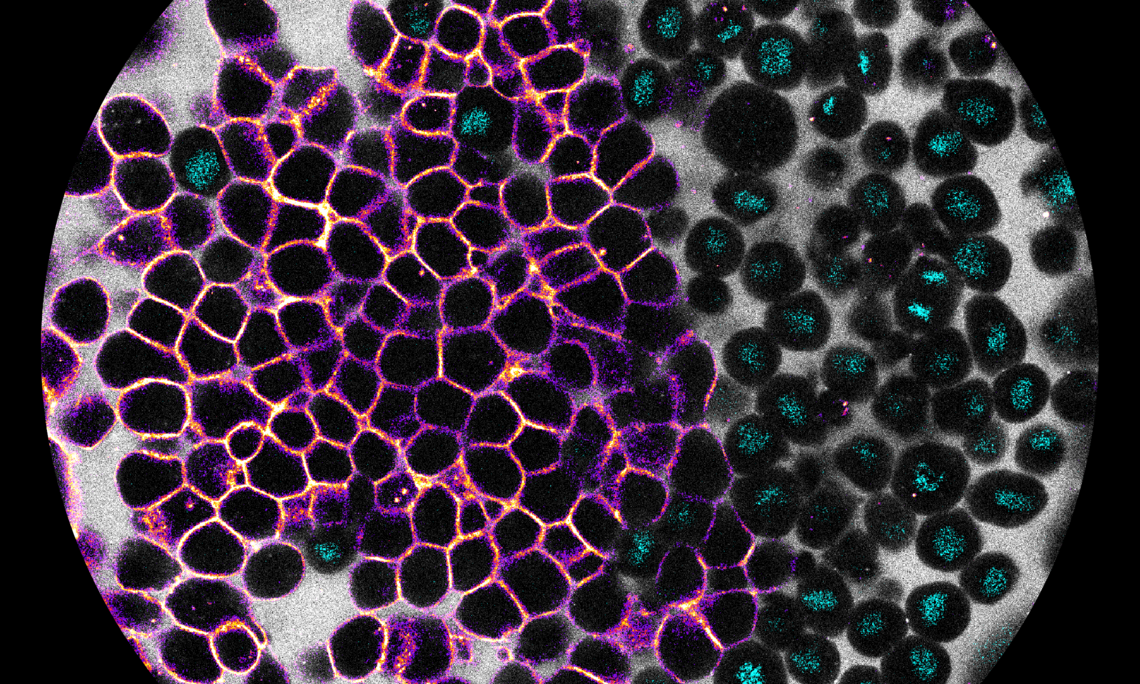
The development of an embryo —the process coming from one cell to a fully developed organism— is one of the most remarkable processes in nature. As an embryo grows, its cells constantly move, organise, and reorganise themselves with extraordinary precision, acquiring both the shape and function that makes the whole organism to work as an integrated system. A crucial question lies on the core of this fascinating process: How the acquisition of function and form are coordinated together?

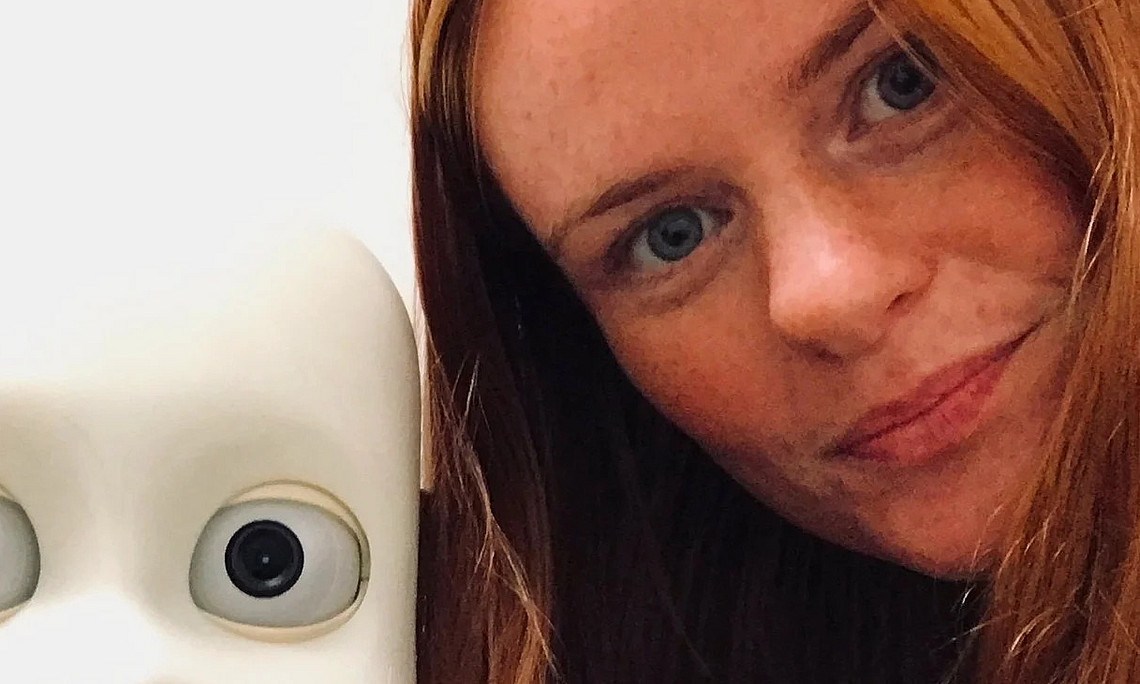
COLIBRI Visiting Fellow Dr. Ziggy O'Reilly

What vision reveals about the seat of consciousness

Researchers at the University of Graz are using vision experiments to investigate how our brain constructs reality. The results offer insights into individual perception, are a piece of the puzzle in the search for the “consciousness” and offer new approaches to understanding neurodiversity.

True crime: psychologist identifies reasons for the fascination of the genre

True crime documentaries, series and podcasts about real crimes have many fans. What is it that makes this genre so fascinating? Is it the insights into the dark side of the human psyche or into meticulous investigations? Or is it that dealing with crime trains our ability to cope with fear? These and other questions are being asked by psychologist Corinna Perchtold-Stefan in a research project. The first results are already available.

Begin of page section:
Additional information:

University of Graz
Universitaetsplatz 3
8010 Graz
Austria
  • Contact
  • Web Editors
  • Moodle
  • UNIGRAZonline
  • Imprint
  • Data Protection Declaration
  • Accessibility Declaration
Weatherstation
Uni Graz

End of this page section. Go to overview of page sections

End of this page section. Go to overview of page sections

Begin of page section:

End of this page section. Go to overview of page sections